
Red Silk Cotton Tree/Bombax ceiba L. (Family: Malvaceae)/Vartika Jain
Semal/Shimul/Shalmali
Red Silk Cotton Tree
Bombax ceiba L. (Family: Malvaceae)
Dr. Vartika Jain
The blossoming of love for Semal
The beautiful scarlet flowers of Semal tree (Bombax ceiba L.) used to attract me when I was pursuing my Post Graduate from Mohanlal Sukhadia University, Udaipur, as it was planted in the botanical garden and was visible from the botany laboratory. However, I never knew that it is going to be a family member in my life until it was selected for my Ph.D. work by my supervisor. The journey, once embarked upon, led me to have such a intimate connection with Semal tree that I used to look for it in every piece of literature I came across.
Description of tree
Semal is a huge tree reaching heights of more than 40 m; having a stem armed with sharply pointed thorns and the pentafoliate leaves which fall during December-April. This leafless period is the commencement of large size, red colored flowers, thereby creating a magnificent appearance so as to call it as ’The King of the Forest Tree’. Therefore, spring is the season when true beauty of Semal tree unveils. Fruiting starts in April-May and black colored seeds enveloped in silky cotton, spreads through air after dehiscence of capsules. The excellent drought tolerance capacity and reclamation ability for waste lands make it an ideal choice for planting even along the roadsides. Interestingly, Semal tree has several names in Sanskrit language and the etymological analysis depicts each name reflecting a particular property of the plant (Jain and Verma, 2012).
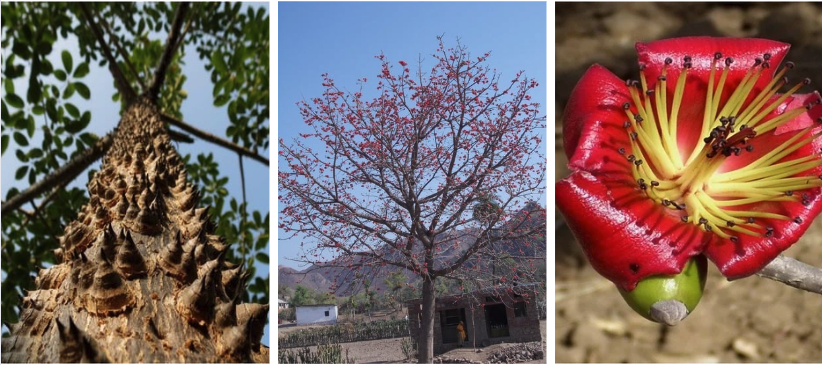
Figure 1. Semal’s thorny stem Figure 2. Semal in full bloom Figure 3. The Semal flower
Cultural versatility
Finding such a versatile tree is indeed a rare gift of nature. It has played an important role in human life as not only providing food (young buds as vegetable), fooder (leaves and flowers), fibre, fuelwood and medicine but an exemplary component of various cultural traditions including folk tales, folk songs, games, proverbs, epics etc. However, one of the disappointing tradition which led my attention towards its conservation was burning of this tree in thousands in Udaipur, Rajasthan during Holika-dahan festival which is celeberated every year on full moon day of Falgun (a month in the Hindu calendar). The tree is considered as ’Prahlad’-the mythological character which remained alive when his aunt ’Holika’ attempted to kill him by fire. The non-flammable quality of Semal tree is due to its thorny nature but this fact is forgotten and the debarked Semal stems are still sold in the market for burning as a traditional Holi-pole leading towards reduction in its population. Considering this, ’Semal Conservation Mission’ was intitiated under the aegis of Society for Microvita Research and Integreated Medicine (SMRIM), Udaipur which included awareness creation, massive planting and adopting an iron-pole as an alternate for burning Holi.
The Medicinal Semal Tree Sanctuary
Apart from this, it is also apt to call this tree as a ’Sanctuary’ or ’Birds’ paradise’. I personally observed several birds and animals enjoying on this tree whether using it for food, shelter, perching, roosting or nesting purposes. Moreover, it was amazing to see more than 15 bee hives on a single Semal tree in Kewra-ki-naal area, near Udaipur, thus validating its status as an ’Umbrella tree’. Another notable observation was an indigenous innovation of using wood of this tree for preparing an artificial limb by a tribal man living in Kotra, Udaipur.
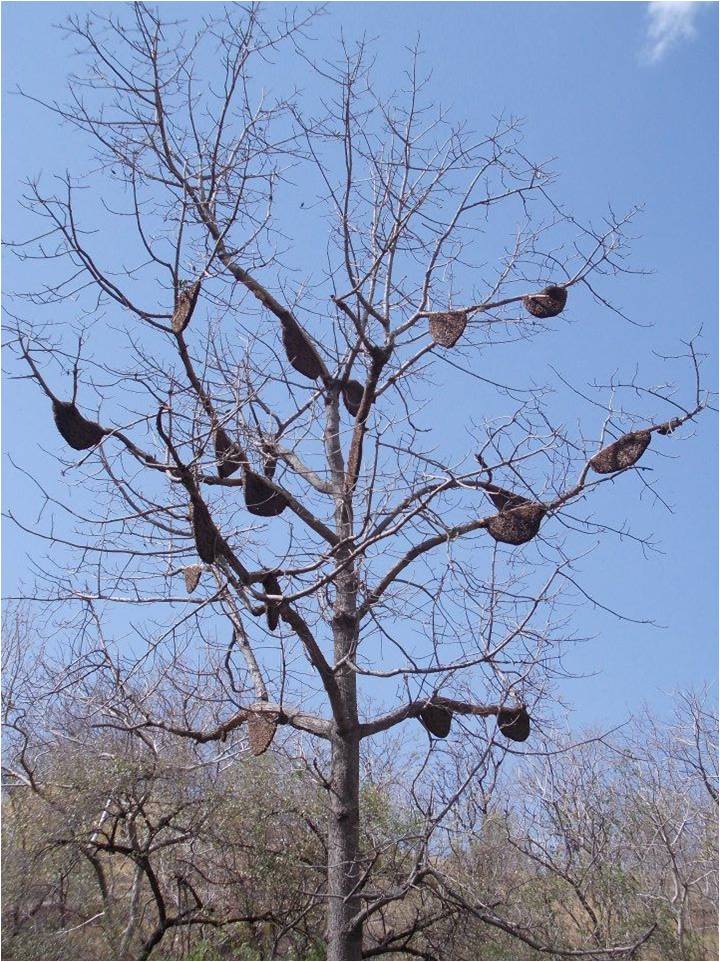
Figure 4. Beehives on a leafless Semal tree
Medicinally, every part of the tree is valuable whether it is thorn, gum, stem bark, root bark, root, flower, fruit, seed, silk-cotton or leaf and ethnic communities are utillizing its benefits since time immemorial. The codified systems of medicine, such as Ayurveda, Unani, Siddha and Chinese medicine also mentions use of this tree for treatment of several ailments. I too found favorable outcomes and reported anabolic, antioxidant, anti-hyperglycemic, hypolipidemic and fibrinolysis enhancing properties of its roots through scientific investigations.
Overall, the tree once selected for the scientific assessment of medicinal virtues became an integral part of my life and the bond thus formed remains alive to this day. Even till today, wherever I go and got a sight of Semal tree, my heart overflows with joy. Its magic reveals itself to anyone who learns to recognize this tree and embrace it with an open-heart.
Literature
Jain, V., Verma, S.K., Katewa, S.S. 2009. Myths, traditions and fate of multipurpose Bombax ceiba- an appraisal. Indian Journal of Traditional Knowledge. 8(4): 638-644.
Jain, V. and Verma, S.K. 2017. Indigenous artificial limb of Bombax ceiba L. wood-A novel ethnobotanical use. Journal of Traditional and Folk Practices. 5(2): 142-147.
Jain, V. and Verma, S.K. 2012. Pharmacology of Bombax ceiba Linn., pp.1-94, Springer Heidelberg. ISBN-978-3-642-27903-4.
Jain, V., Verma, S.K., Sharma, S.K., Katewa, S.S. 2011. Bombax ceiba Linn.: As an Umbrella tree species in forests of southern Rajasthan, India. Research Journal of Environmental Sciences. 5(8):722-729.
Jain, V. and Verma, S.K. 2014. Assessment of credibility of some folk medicinal claims on Bombax ceiba L. Indian Journal of Traditional Knowledge. 13(1):87-94.
Kumari, N., Radha, Puri, S., Kumar, M., Natta, S., Dhumal, S., Raman, P., Rajalingam, S., & Singh, J. (2025). Exploring the Therapeutic Potential of Bombax ceiba L. Flowers as Source of
Functional Food Development: A Review. Chemistry & biodiversity, 22(11), e00247. https://doi.org/10.1002/cbdv.202500247
About the author
Dr. Vartika Jain Ph.D. is working as an Associate Professor, at Department of Botany, Govt. Meera Girls’ College, Udaipur, India. She has been doing research on various dimensions of Ethnobotany, Medicinal Plants, Biodiversity Conservation, Ethno-pharmacology, Phytochemistry and Plant taxonomy for last 20 years. Dr. Jain has authored five reference books which include “Pharmacology of Bombax ceiba Linn. (2012)” and a gigantic book entitled “Compendium of Indian Folk Medicine and Ethnobotany” (2016). She has also worked extensively on conservation of Semal tree (Bombax ceiba) in Udaipur district, Rajasthan, India since 2006 and called as ‘Semal Lady of Rajasthan’. Dr. Jain is recipient of Dr. E.K. Janaki Ammal Medal Award (2025) and Young Achiever Award in Ethnobiology (2017) for her extensive contribution to the field of Ethnobotany and also serving as an Editor of peer-reviewed International Journal ‘Ethnobotany’ published by Society of Ethnobotanists, Lucknow as well as a tri-annual Bulletin on Microvita Research and Integrated Medicine (BOMRIM) published by SMRIM, Udaipur. She can be contacted at: vartikabotany@gmail.com
The Society for Ethnobotany is open to researchers, practitioners, and enthusiasts of ethnobotany and economic botany.
The 2026 SEB Annual Meeting will take place in Montpellier, France, from May 31-June 4th!
If you have an interest in ethnobotany or economic botany you can become a member of the Society for Ethnobotany.
If you are a member of the Society for Ethnobotany and would like to contribute a Favorite Plant please contact Blair Orr, blairorr@ymail.com. (Note: ymail, not gmail.)